Pergolas in Renton, WA
Our Services
Do You Need a Permit for a Pergola in Renton?
Renton splits pergola permits into two categories. The difference matters because it changes your timeline, your setback options, and what the city reviews. Structure TypePermit Required?Setback RulesDetached, ≤80 sq ft, ≤12 ft side, ≤10 ft tallTypically exemptStandard setbacks may be waived within limitsAttached to houseYesMust stay 5+ ft from rear property linePergola over permitted deckDepends on deck permit statusFollows deck permit pathPergola over deck 30+ inches above gradeYesFull structural review The 80-square-foot exemption doesn't clear the way for anything. Easements, HOA rules, tree protection zones, drainage paths, and corner-lot sightline restrictions can still affect where and how a freestanding pergola gets built.
Attached Pergolas and Patio Covers
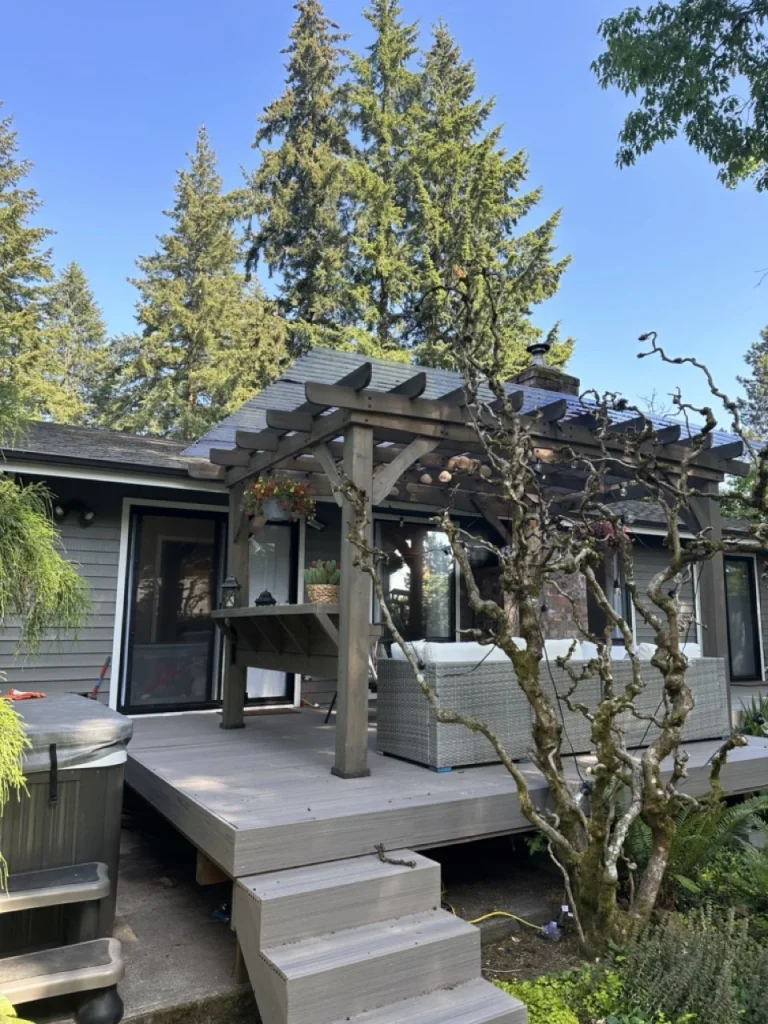
An attached pergola is a structural addition in Renton's view. Once it connects to the house via a ledger board, the city reviews the beam-to-wall attachment, lateral bracing, and load path. That review applies whether the pergola is fully open or carries a solid shade cover. One planning advantage: Renton allows attached patio covers to extend into the rear yard setback. The structure must stay at least 5 feet from the rear property line and comply with side yard setback requirements. On a shallow lot, that 5-foot minimum can recover usable space that a standard setback would otherwise cut off.
Pergolas Over Existing Decks
Deck height at all points around the 5-foot perimeter
Whether the deck is freestanding or ledger-attached
Existing joist and beam sizing
Post base locations and footing capacity
Lateral bracing requirements
Tree Rules That Affect Pergola Post Placement
Sloped Yards in Renton Highlands
Electrical: Lighting, Heaters, and Fans
Fixture placement and outdoor ratings
Switch and outlet locations
Heater mounting height and clearance
Fan clearance from rafters
Conduit routing through posts or beams
HOA Review: Fairwood and East Renton Highlands
City approval doesn't cover HOA approval. In some Renton-area neighborhoods, a pergola needs to clear an architectural review board before construction begins. Fairwood Firs has written standards covering property appearance, visible storage, parking, trash screening, and job-site tidiness during construction. Materials can't sit in piles on the street. Work vehicles need planned parking. The site has to stay clean while the build is underway. Some communities in East Renton Highlands work with The Management Trust, a professional property management group. Those boards typically require standardized architectural review applications that include size, materials, finish colors, siting, and neighbor impact. For HOA properties, we prepare the project documentation before construction starts: site plan, pergola dimensions, material specs, color and finish notes, construction access route, and cleanup plan. HOA rules change, so we verify current requirements for each neighborhood rather than relying on what applied to a previous project.
Construction Hours in Renton
Renton restricts noise-generating residential construction to 7:00 a.m. to 10:00 p.m. Monday through Friday, and 9:00 a.m. to 10:00 p.m. on weekends. We work within those windows and plan material staging, saw-cutting areas, and parking before the project starts.
Pergola Types We Build in Renton
Freestanding pergolas
Attached pergolas and patio covers
Pergolas over existing decks
Pergolas over patios on grade
Compact structures within Renton's permit exemption limits
Pergolas with privacy screens
Pergolas with lighting and heater prep
Wood and composite pergola framing
Pergolas on sloped lots
Pergola and deck combinations
Our Planning Process
Areas We Serve
Frequently Asked Questions
Do I need a permit for a pergola in Renton, WA?
A detached pergola may be permit-exempt if it’s 80 square feet or smaller, no side exceeds 12 feet, and it’s no taller than 10 feet from finished grade. Attached pergolas require a building permit.
How close to my property line can a pergola be?
Detached pergolas within the exemption limits may qualify for reduced setback requirements. Attached pergolas and patio covers can extend into the rear yard setback only if they stay at least 5 feet from the rear property line and meet side yard setback rules.
Does an attached pergola always need a permit in Renton?
Yes. Any pergola that connects to the house triggers permit review. The ledger board, structural attachment, and load path all get reviewed.
Can I build a pergola over an existing deck?
Yes, but the deck framing has to be checked first. If the deck is ledger-attached or sits more than 30 inches above grade, permit review likely already applies to the deck and will cover the pergola addition.
What's Renton's 30-inch deck rule?
Decks more than 30 inches above grade require a building permit. Height is measured at the ground within a 5-foot perimeter around the deck, which catches sloped lots where one side reads low.
Can I add lights or a heater to my pergola?
Yes. Electrical work requires a licensed contractor unless you’ve owned and lived in the home for at least 3 consecutive years.
Can I remove a tree to make room for a pergola?
You can remove up to two significant trees (6-inch DBH or greater) per calendar year without a permit. More than two in a year, or any landmark tree (24-inch DBH or greater), requires a Routine Vegetation Management Permit and arborist documentation.
Can a pergola be built on a sloped lot in Renton?
Yes, but slope often requires a level pad, deck platform, or retaining wall. Retaining walls 4 feet or taller, or shorter walls under surcharge load, require a permit and Professional Engineer design.
Do Fairwood or East Renton Highlands HOAs review pergolas?
Often yes. HOA boards may review size, materials, color, placement, visibility, and construction site management. We verify current requirements for each community before finalizing the design.
Areas Where We Provide Deck Builders Services
Honeycomb Deck Builders is proud to provide Deck Builders and renovation services in the Renton, WA area. Our Deck Builders services extend throughout King County and surrounding communities. We proudly service the following areas:
Get a Pergola Quote in Renton
Call Honeycomb Deck Builders at (425) 273-4313. We’ll check the permit path, review the site conditions, and help you plan a pergola that fits your yard and Renton’s actual rules.